
The Whys and Hows of Offering Remote Meetings (Part 2)
Types of Meetings: In-Person, Fully Remote and Hybrid
Hopefully you’re reading this after using some of our handy tips from Reasons Why You Should Offer Remote/Hybrid Meetings for your Organization. I wanted to explore the types of meetings available and their respective strengths and weaknesses in the context of political organizations. Nothing is every one-size-fits-all and I encourage your groups to experiment.
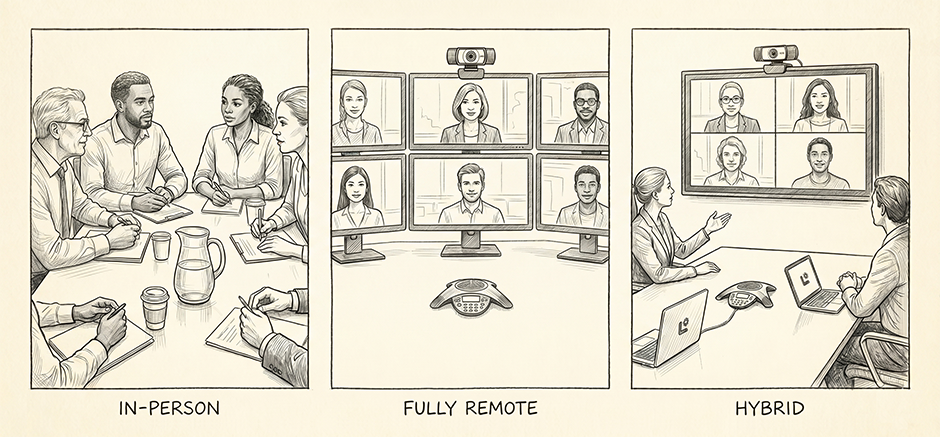
Every meeting breaks down into three basic types.
- In-Person: Members meet fully in-person. The oldest (and in some ways, simultaneously the least and most efficient) form of meeting! Often, if meeting structure and note-taking are not up to standard, a lot of words can be said in this type of meeting, while few actionable items are actually recorded from those conversations.
- Fully Remote: Meeting organized and conducted fully on-line using such tools as Zoom, Google Meet, Discord and a variety of other tools. You can even use Microsoft Teams if you’ve lost a bet or have a masochistic streak. Most of your meetings should favor this format if you have the population that can deal with it. If your group tends to skew more older/retired, this probably isn’t the preferred method, though it can be still be used for sub-groups on a regular basis as the audiences are smaller and tend to be more comfortable with technology.
- Hybrid: A combination of both in-person and remote meetings, the most flexible and most complex meeting to conduct. The benefits tend to outweigh the challenges with a little planning and the right equipment for your specific group. It WILL take trial and error to get started if you’ve never run a hybrid meeting before.
In-Person Meetings
In-person meetings tend to maintain the traditional meeting atmosphere and allow easier creation and preservation of personal connections. In today’s world, these are rarer and hence, valuable in ways that are hard to quantify. Depending on your meeting structure, participation and back-and-forth dialogue can feel more natural and easier to moderate. Those positives are real and shouldn’t be ignored, but they come with a lot of negative baggage. In-person meetings are generally less inclusive, accessible, and organizationally efficient compared to remote or hybrid formats, with several participant and logistical barriers:
- Participation Barriers
- Hinders participation from people who are geographically dispersed, face physical or health-related barriers, or have transportation challenges.
- Excludes those with busy schedules, childcare conflicts, or mobility issues due to the travel and preparation required.
- May not be physically accessible (e.g., handicap accessible) to all members. I can’t emphasize how important this is, both from a party positioning and moral standpoint.
- Lacks the flexibility needed for caregivers or those working late shifts.
- Does not ensure continuity during public health emergencies, inclement weather, or other unexpected disruptions. We all remember the COVID pandemic and the havoc is played.
- Less effective at engaging new demographics, such as younger members and working professionals, who often prefer virtual participation. This is a factor that shouldn’t be underestimated, the preferred communications for each generation tend to vary wildly. If you’re struggling to recruit a younger membership, this is one of the first places you should look to improve the situation.
- At the end of the day, you're dealing with people. Some of whom you’ll get along with, and some you would rather avoid. This is less awkward when you don’t have to share the same physical space.
- Logistical Inefficiencies
- Requires constantly reserving, setting up, and cleaning a physical venue.
- May involves costs related to renting meeting space, paying for refreshments, and printing materials.
- Tracking attendance, recording meeting notes can also be less efficient, depending on your setup.
For Fully Remote
Positive Aspects
While there are initial setup costs, just as there are for other methods, remote and hybrid meetings can streamline administrative tasks over time.
- Increased Participation and Reach
- Attracts younger members and working professionals who prefer virtual participation.
- Increases attendance from people with busy schedules, childcare conflicts, or mobility issues, as it removes the need for travel and preparation.
- Connects with those who are geographically dispersed, or who face physical, health-related, or transportation challenges.
- Simplified Logistics: No need to constantly reserve, set up, and clean a physical venue.
- Easy Record Keeping: Digital meetings are easily recorded and transcribed, simplifying the process of creating minutes and sharing meeting outcomes with those who couldn't attend. If you choose to leverage AI notes, transcripts and other tools, less volunteer time is needed to get acceptable results, though I still recommend they are reviewed and vetted. Often the time savings is considerable.
- Cost Savings: Reducing or eliminating the need to rent meeting space, pay for refreshments, and print materials can save the local group significant funds.
- Promotes Accessibility and Continuity
- Ensures continuity during public health emergencies, inclement weather, or other unexpected disruptions.
- Provides flexibility for caregivers and those working late shifts, allowing them to join meetings without leaving home.
- Eliminates the need for attendees to navigate physical spaces, which ensures participation from those with disabilities or chronic health issues.
- Enhances Organizational Efficiency and Cost Savings
- Simplifies logistics by eliminating the need to reserve, set up, and clean a physical venue.
- Saves funds by reducing or eliminating costs for renting space, printing materials, and refreshments.
- Facilitates easy record keeping, as digital meetings are easily recorded and transcribed for minutes and sharing outcomes.
Negative Aspects
Nothing is perfect, but I maintain the list of negatives is short and with a little preparation, the easiest to overcome.
- Resistance can stem from a fear of losing the traditional meeting atmosphere
- Lack of comfort with technology.
- Unexpected hardware and software problems
While not required, I highly encourage purchasing a dedicated service account for your meetings. There’s nothing worse than either hitting a time limit on your personal account and the meeting abruptly stopping. Plans across the various platforms are affordable and often the savings from not having to pay for snacks, printing, rental fees and other in-person logistics make the costs roughly the same. We’ll talk more about this later in the series under “Equipment and setup”.
Hybrid Meetings
Positive Aspects
- They are the most flexible type of meeting to conduct. A hybrid meeting contains all the previously mentioned positive aspects for in-person and fully remote options, so I won’t repeat them here, but it’s a lot of good stuff!
- They are designed to maintain the in-person option while providing necessary accessibility for others.
- You can frame the remote option as a supplement, not a replacement, for in-person interactions. Some people will always prefer in-person, but even they will appreciate the ability to attend when they otherwise couldn’t.
Negative Aspects
- They are the most complex type of meeting to conduct.
- They are more resource intensive then choosing a purely in-person or remote meeting
Making the Transition
After almost thirty years in the IT industry, I’ve become a planner whether I wanted to or not and like most changes, planning paired with good communication will ease the transition to fully remote or hybrid meetings. If you’ve not done so already, be sure to read the first article in this series “Reasons why you should offer remote/hybrid meetings”.



Comments on this entry are currently disabled.