

The Whys and Hows of Offering Remote Meetings (Part 1)
In this series of articles, I outline the various challenges and opportunities presented when deciding to offer remote or hybrid meetings for your local Democratic group. This series will cover a few key areas, with the aim to make this a comprehensive and regularly updated source for the future.
- Reasons why you should offer remote/hybrid meetings <- You are here
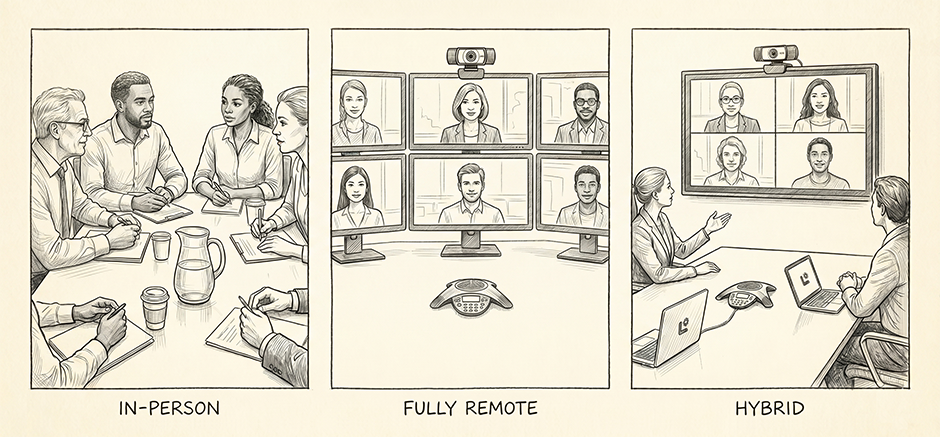
- Types of Meetings: In-person, fully remote, and hybrid
- Equipment and setup (Coming Soon)
- Security and privacy considerations (Coming Soon)
- After the meeting (Coming Soon)
Reasons Why You Should Offer Remote/Hybrid Meetings for Your Organization
Offering remote or hybrid meeting options isn’t optional anymore. It's a critical strategy for maximizing participation and inclusion in local politics. For Democratic/liberal/progressive groups, this approach is an excellent fit for their shared values of inclusion and accessibility. Aside from these aspirational goals, there are plenty of practical reasons to offer something more than in-person only meetings.
Expanding Reach and Participation
One of the most immediate benefits is the ability to connect with people who are geographically dispersed, or who face physical or health-related barriers or transportation challenges. This is particularly important in rural counties or large towns where travel time can be a significant barrier, or where demographics tend to skew older.
I think the most obvious selling points are:
- Increased Attendance: People with busy schedules, childcare conflicts, or mobility issues are far more likely to attend an online meeting from home than an in-person meeting requiring travel and preparation.
- Engaging New Demographics: Remote options tend to draw in younger members and working professionals who are comfortable with technology and often prefer virtual participation.
My view is usually that more is almost always better than less when it comes to getting people involved. It’s rarely a good idea for an organization that wants to grow and increase visibility to make its most basic activity harder to do. Attending their first party meeting is often the first step to wider participation and volunteering with your organization.
Promoting Inclusivity and Accessibility
A remote or hybrid format dramatically lowers the barriers to entry for many potential members and attendees by providing:
- Physical Accessibility: It eliminates the need for attendees to navigate physical spaces (is yours handicap accessible?), ensuring participation from those with disabilities or chronic health issues.
- Flexibility for Caregivers and Workers: Parents of young children, people caring for elderly relatives, or those working late shifts can more easily join an important meeting without needing to leave their homes or workplaces.
- Weather and Public Health: Remote meetings ensure continuity during inclement weather, public health emergencies (like pandemics), or other unexpected disruptions (Surprise War?).
Getting Buy-In From Your Group
Sometimes, when working with an existing group, the biggest hurdle isn't the technology—it's convincing long-time members and leadership of the necessity and value of change. Transitioning from a purely in-person format requires building consensus. This can be less simple than you think, as I found out myself.
Addressing Common Concerns
Resistance to remote or hybrid meetings often stems from a fear of losing the traditional meeting atmosphere or a lack of comfort with new technology.
- "We'll lose the personal connection": Acknowledge the importance of in-person interactions, but frame the remote option as a supplement, not a replacement. Hybrid meetings are designed to maintain the in-person option while providing necessary accessibility for others.
- "It's too complicated": Start small. Pilot a single meeting in a fully remote format or use a simple setup for the hybrid option. Offer clear, simple training sessions focused on only the essential functions. Assign a "Tech Buddy" for initial meetings to help members having trouble connecting. There’s probably at least one member who’s used to dealing with hybrid or remote meetings at their job. Hybrid meetings are actually one of the more challenging ways to conduct a meeting and consider going fully remote at least some of the time as a way to simplify things.
- "We can’t ensure security and privacy": Use trusted, secure platforms (e.g., paid Zoom or Google Meet accounts, not free tiers) and clearly outline the privacy protocols to address concerns about data security or unauthorized attendees. This is a critical area and is further addressed later in the series under Security and Privacy Considerations
Strategies for Gaining Support
- Highlight the Wins: Share stories or data points showing increased attendance and engagement from the first few remote or hybrid meetings. Focus on the new people who were able to join. I’ll say it again. More is usually better than less, even if it’s only a handful of people. You don’t know which one might be critical to the success of an initiative down the line.
- Leadership Buy-In: Have key officers and influential members champion the change. Their enthusiasm and public support are essential for smooth adoption. If possible, try to recruit one ally before making your pitch.
- Democratic Process: If appropriate, put the decision to transition to a vote or hold an open discussion period where concerns can be voiced and addressed transparently. Frame it as a move that aligns with the organization's progressive values of inclusion and participation. I’ve been surprised how often I have to bring this up. We like to vote on things after all.
- Offer Compromise: If you don’t have enough support for a regular remote or hybrid meeting, see if you can offer it as a request-only option at first. This can be a good way to work out the kinks in your setup and training.


Comments on this entry are currently disabled.