
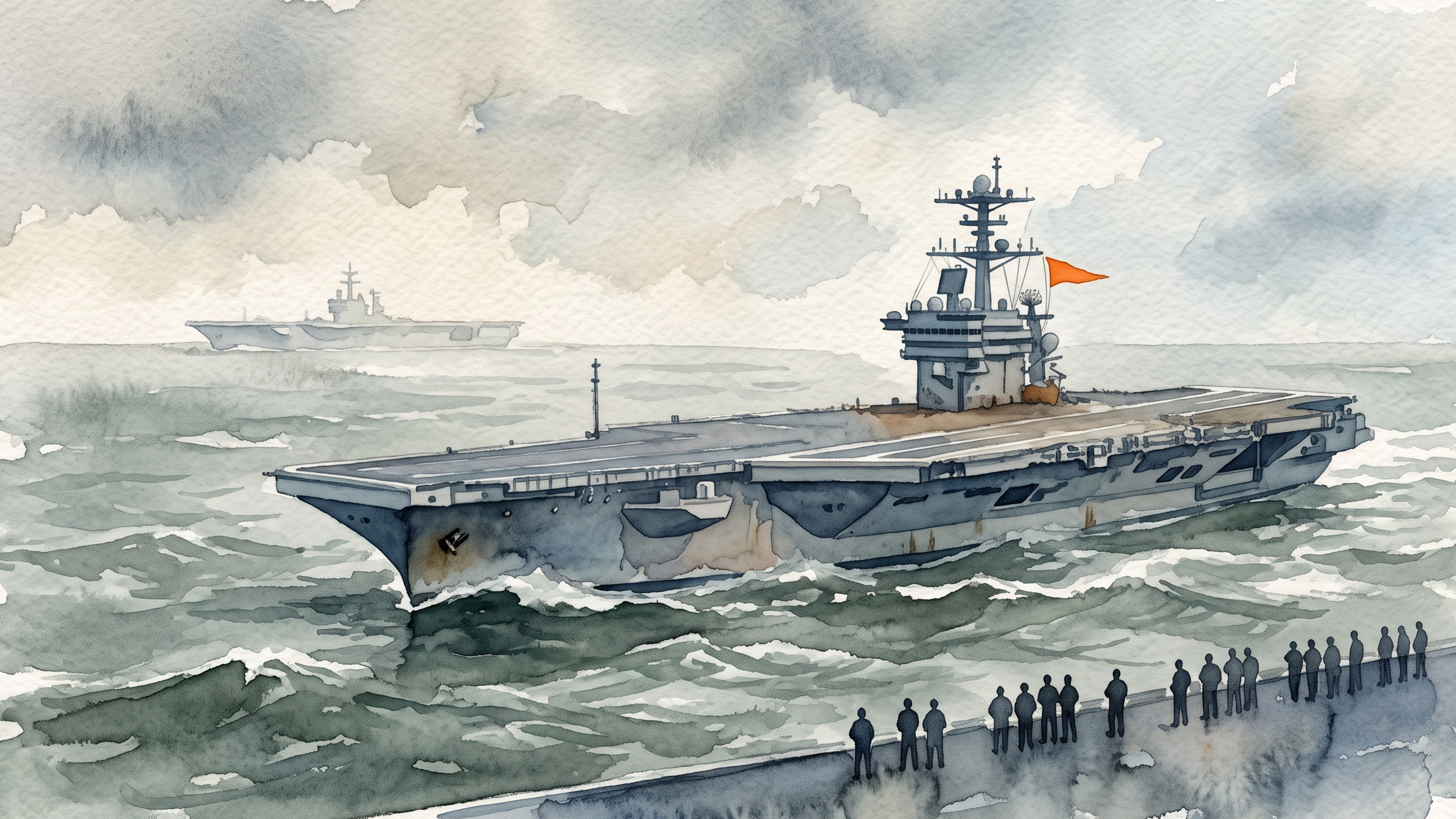
Dear USS Abraham Lincoln crew, thanking you for your service isn’t nearly enough
Letters to the EditorThe USS Abraham Lincoln returned to its home port after a record-setting deployment plagued by supply shortages (food, cleaning supplies, and more), during which at least eight service members attempted suicide.
Source: USS Lincoln returns home after long deployment — AP News
Unfortunately, in our social media world, some people made divisive comments toward those who expressed empathy for what these sailors endured. The negative comments were essentially like this: “Well, this is what they signed up for.” Even though there were plenty of supportive comments, I felt compelled to ask my dear friend, Joe, to tell us his story. (I withheld Joe’s last name for privacy.) Here it is.
My name is Joe. A good friend asked me to write about my experience serving on the USS America (CV-66) in light of recent reports regarding the conditions sailors faced aboard the USS Abraham Lincoln. I served in the U.S. Navy from January 1981 to January 1987, spending four and a half of those years—from August 1982 until my discharge—aboard the USS America.
At first, I was in awe of the ship. But that honeymoon phase wore off in about a week, and from then on, I started counting down the days until my discharge. Life on an aircraft carrier is extremely difficult. In fact, I feel like my time served was about as good as it gets onboard a carrier—and that alone says a lot. Those four-plus years at sea still feel longer to me than the 40 years that have passed since I got out.
There are hundreds of stories I could tell about daily life, about how dangerous the flight deck and shipboard operations are, and about the few times I cheated death. But a few specific memories illustrate what everyday reality was like.
The food was generally fine. On a carrier, you have two main mess decks: the aft mess, which served traditional meals like steak and potatoes, and the forward mess, which we nicknamed “McDonald’s” because it offered burgers, deli sandwiches, and breakfast items. One evening while underway, I went to the forward mess for spaghetti and meat sauce. As I started eating, I noticed a fingernail clipping in the sauce. I threw the plate away and walked to the aft mess to get a cheeseburger instead. I took one bite and found a wire bristle from the grill-cleaning brush embedded in the meat. At that point, I surrendered to the reality that I had nowhere else to go. From that day on, I stopped inspecting my food—I just ate it.
I feel it’s important to note that during my three deployments, including two in the same regions where the Lincoln operated, we never suffered from food shortages—even when we spent over 100 continuous days at sea. Yet even with steady supplies, life was still incredibly rough.
Living conditions were cramped. I slept in a berthing compartment that held roughly 200 sailors packed into a space no larger than 1,200 square feet. The heads (bathrooms) were kept clean, but there was almost always an inch of standing liquid on the deck—half water, half urine. That was what we stood in every morning to shave and brush our teeth. As for the showers, hot water was hit or miss.
No matter how vividly I paint this picture, words will never fully capture the deep, relentless frustration of shipboard life. Even under the best circumstances, you have to live it to truly understand it.
If conditions aboard the Lincoln had merely matched what we went through, you wouldn’t have heard a single complaint from those sailors. But their situation was far worse. Enemy actions crippled the logistics infrastructure, cutting off the ship’s ability to replenish basic necessities like food, cleaning supplies, and mail.
Those sailors were trapped in extreme conditions with no end in sight. On the America, we cleaned our quarters and heads three times a day—a deep clean every morning, inspected by a Chief, followed by two spot checks by a supervisor. The crew on the Lincoln couldn’t even maintain basic hygiene because they ran out of cleaning supplies. They were going hungry because resupply ships couldn’t reach them.
Their complaints were not whining—they were a cry for help to survive. Anyone attempting to dismiss or downplay what those sailors endured either knows nothing about life at sea or is actively gaslighting the public.
I have total respect for the crew members who had the courage to speak up, and I have zero patience for anyone who disparages their hardship.

Loretta Lawler
Joe, thank you for your service and your friendship. You’re a true example of patriotism and citizenship.